10 Best Educational Christmas Gifts for Kids Ages 4–7 That Make Learning Fun
Oct 22, 2026By Aja McNair
10 Best Educational Christmas Gifts for Kids Ages 4–7 That Make Learning Fun
Looking for educational Christmas gifts for kids that are actually fun? Whether you're shopping for a preschooler, kindergartener, or early elementary student, finding the perfect Christmas gift can be exciting—and a little overwhelming!
As parents, we want to see our children's faces light up on Christmas morning. But wouldn't it be wonderful if some of those presents also helped them build important skills, develop confidence, and discover just how exciting learning can be?
The good news is that learning doesn't have to look like worksheets, flashcards, or sitting at a desk.
Sometimes, the best learning happens when children are playing, exploring, laughing, and having so much fun that they don't even realize they're practicing important skills!
As an educator, I'm always looking for creative ways to make learning more enjoyable for children and easier for the adults teaching them.
That's why I've put together this list of 10 educational Christmas gifts for kids ages 4–7 that encourage learning through play.
From phonics and reading games to hands-on math activities and problem-solving challenges, these educational toys make wonderful Christmas gifts for preschoolers, kindergarteners, first graders, and young learners who could benefit from additional practice.
Let's take a look!
Why Educational Christmas Gifts Are Worth Considering
Before we jump into the gifts, let's talk about something important.
Children learn through play.
When children build, sort, count, match, experiment, and solve problems, they're practicing skills that support their development.
And when those experiences are enjoyable, children are often more willing to participate, try again when something is challenging, and practice skills repeatedly.
Educational games can help children develop:
-
Early reading and phonics skills
-
Letter recognition and word-building abilities
-
Number sense and mathematical thinking
-
Problem-solving and critical-thinking skills
-
Memory, concentration, and attention
-
Fine motor skills and hand-eye coordination
-
Confidence and independence
But here's something I always want parents to remember: An educational toy doesn't have to teach everything to be valuable.
Some games are wonderful for strengthening a specific skill, while others encourage creativity, cooperation, or exploration.
The key is choosing activities that match your child's developmental needs, interests, and current abilities.
Now, let's get into these Christmas gift ideas!

1. Hot Dots Educational Games — Interactive Learning With Immediate Feedback
If you're looking for an educational Christmas gift that encourages independent learning, Hot Dots is worth exploring.
Hot Dots activities use an interactive learning pen with specially designed answer choices. Children select an answer and receive feedback that lets them know whether they've chosen correctly.
One thing I appreciate about this type of educational game is that children can practice answering questions and checking their work without needing an adult to tell them whether every answer is correct.
Depending on the version you choose, Hot Dots activities can focus on early reading, phonics, math, and other foundational learning skills.
Why I Like This Gift
Hot Dots can encourage children to practice skills while building independence and confidence.
It's also a convenient option for parents looking for learning activities that children can revisit throughout the year.
Skills supported: Independent practice, early literacy or math skills depending on the set, and self-checking.
Best for: Children who enjoy interactive activities and are ready to practice the skills included in their chosen set.
Shop Hot Dots:
Featured Version: https://link.amazon/B0bLi7a4W
Alternative Versions:

2. Patty Pillar Game — Hands-On Learning Through Play
Not every educational gift needs a screen, a workbook, or a complicated set of instructions.
Sometimes, a simple hands-on game can create wonderful opportunities for learning.
Patty Pillar is another playful gift option to consider for young children.
Games like this can provide opportunities for children to practice following directions, taking turns, paying attention, and participating in shared play.
Why I Like This Gift
I love activities that allow children to interact with materials instead of simply watching something happen.
Depending on how you play, you can also encourage conversation, descriptive language, counting, and other age-appropriate learning opportunities.
Skills to encourage during play: Listening, following directions, turn-taking, and communication.
Best for: Young children who enjoy hands-on games and interactive play.
Shop Patty Pillar:

3. Osmo Starter Kit — Where Hands-On Learning Meets Technology
If your child enjoys technology, Osmo offers a different way to interact with educational activities.
Instead of simply tapping buttons on a screen, compatible Osmo games combine physical objects and hands-on activities with interactive digital experiences.
Depending on the kit, children may explore early math, problem-solving, letters, creativity, or other educational challenges.
Why I Like This Gift
Technology can be a helpful learning tool when it's used intentionally.
What makes Osmo interesting is the combination of physical interaction and digital feedback.
Children aren't necessarily limited to watching or tapping a screen. They can manipulate objects, test ideas, and interact with learning challenges.
Before purchasing, make sure the kit you choose is compatible with your device and includes activities appropriate for your child's age and ability.
Skills supported: Vary by kit and may include early math, literacy, creativity, and problem-solving.
Best for: Children who enjoy interactive technology and hands-on challenges.
Shop Osmo Starter Kit:
Featured Version: https://link.amazon/B0cTYJPeq
Alternative Versions:

4. Numberblocks MathLink Cubes — Make Math Something Children Can See and Touch
If you've ever watched a child struggle with a math concept, you know that sometimes explaining it isn't enough.
Children often benefit from seeing and physically working with the numbers they're learning.
That's one reason I love hands-on math manipulatives!
Numberblocks MathLink Cubes bring familiar Numberblocks characters and early math concepts into a building experience.
Children can connect cubes, create number representations, compare quantities, and explore number relationships.
Why I Like This Gift
Numberblocks MathLink Cubes give children opportunities to move from simply saying numbers to understanding what those numbers represent.
For example, instead of only memorizing that three plus two equals five, a child can build a group of three cubes, add two more, and count the total.
That concrete experience can help children make sense of mathematical ideas.
You can also use cubes to practice counting, comparing quantities, composing numbers, and exploring addition and subtraction.
Skills supported: Counting, number sense, number relationships, and early addition and subtraction.
Best for: Preschoolers and early elementary students developing foundational math understanding.
Shop Numberblocks MathLink Cubes:
Featured Version: https://link.amazon/B0cnHfDJu
Alternative Version:

5. Reading Readiness Activity Set — Build a Strong Foundation for Reading
Let's talk about one of my favorite subjects: teaching children how to read!
Before children become confident readers, they need to develop important foundational literacy skills.
Depending on where a child is in their reading development, that might include recognizing letters, connecting letters with sounds, identifying sounds in spoken words, blending sounds together, or beginning to decode simple words.
A reading readiness activity set can provide additional opportunities to practice early literacy skills through hands-on learning.
Why I Like This Gift
One of the biggest mistakes we can make when teaching reading is assuming every child needs the exact same activity.
A child who is still learning letter-sound relationships needs something different from a child who already knows those relationships and is learning to blend sounds into words.
That's why it's important to choose reading games and activities that match your child's current skills.
When used intentionally, literacy activities can help children practice foundational skills in a more enjoyable way.
Skills supported: Depend on the specific activities included in the set.
Best for: Children developing or strengthening early literacy skills.
Shop Reading Readiness Activity Set:

6. Math Slam — Make Math Practice Feel Like a Game
Does your child love fast-paced games and interactive challenges?
Math Slam is an educational gift option that turns math practice into an engaging game experience.
Rather than simply completing problems on paper, children can interact with math questions in a game-like format.
Why I Like This Gift
Math fluency is an important part of developing confidence with mathematics.
As children gain understanding and practice, they can become more efficient at solving familiar types of problems.
Interactive games can make repeated practice more appealing.
However, remember that speed isn't the same as understanding.
If your child is still learning a particular math concept, focus on helping them understand it before expecting quick answers.
Skills supported: Math fact practice, attention, and fluency with the operations included in the game.
Best for: Children who already understand the relevant math concepts and are ready for additional practice. Check the specific game's age recommendation.
Shop Math Slam:

7. Brainometry — Encourage Problem-Solving and Critical Thinking
Some of the best educational gifts are the ones that make children stop, think, and try a different approach.
Brainometry is a gift option for families interested in games that challenge children's thinking.
Problem-solving activities can encourage children to examine information, recognize patterns, test possibilities, and keep trying when the first attempt doesn't work.
Why I Like This Gift
I believe it's important to give children opportunities to think through challenges rather than immediately providing the answer.
When children work through an appropriate challenge, they're practicing persistence and flexible thinking.
Of course, the goal isn't to make children frustrated.
The best activities provide enough challenge to encourage growth while still allowing children to experience success.
Skills to encourage: Problem-solving, reasoning, persistence, and flexible thinking.
Best for: Children who enjoy puzzles, challenges, and thinking games. Check the specific version's age guidance.
Shop Brainometry:

8. Zingo! Word Builder — Turn Word Building Into a Game
Now we're getting into another one of my favorite types of educational gifts: phonics and word-building games!
Zingo! Word Builder offers children an interactive way to work with letters and words.
Word-building games can be especially useful when children are learning how letters represent sounds and how those sounds come together to form words.
Why I Like This Gift
Learning to read requires more than memorizing what words look like.
Children need to understand the relationship between letters and sounds and learn how to use that knowledge to decode words.
When children manipulate letters to create words, they have opportunities to notice how changing one letter can change a word.
For example:
cat → hat → hot
With appropriate guidance, an activity like this can help children pay attention to individual sounds and the letters that represent them.
Skills supported: Word building, spelling patterns, and phonics practice.
Best for: Children who have developed basic letter-sound knowledge and are ready to work with simple words.
Shop Zingo! Word Builder:

9. hand2mind Reading Rods — Make Phonics Hands-On
If you're teaching a child how to read, this is another educational gift worth considering.
Reading Rods are hands-on word-building materials that allow children to manipulate letters or letter patterns as they construct words.
Instead of only looking at letters printed on a page, children can physically move and arrange pieces while practicing reading and spelling.
Why I Like This Gift
When teaching phonics, I want children to understand what they're doing—not simply memorize a series of words.
Hands-on letter manipulation can help make abstract sound-symbol relationships more concrete.
For example, a child might build the word map, read it by blending the sounds, and then replace the first letter to create cap.
That small change provides an opportunity to discuss how individual letters represent sounds and how those changes affect a word.
You can also use word-building activities for guided practice, review, and reinforcement.
Skills supported: Phonics, decoding, encoding (spelling), and word building.
Best for: Children learning or strengthening letter-sound relationships and decoding skills.
Shop hand2mind Reading Rods:

10. Learning Resources POP for Phonics — Make Reading Practice Playful
Our final educational Christmas gift brings us right back to foundational reading skills.
Learning Resources POP for Phonics is a game-based option for practicing phonics skills.
For children who need repeated exposure to letters, sounds, and words, educational games can provide another way to revisit previously taught skills.
Why I Like This Gift
Repetition is important when children are learning to read.
But repetition doesn't always have to look the same.
A child might practice a particular sound during a structured reading lesson, review it using letter cards, build words with manipulatives, and then revisit that same skill through a game.
The learning objective remains consistent, but the practice experience changes.
That's one reason phonics games can be valuable additions to your teaching materials.
Skills supported: Phonics review and practice, depending on the specific game version.
Best for: Children who are ready to practice the phonics skills included in the game.
Shop Learning Resources POP for Phonics:
How to Choose the Best Educational Christmas Gift for Your Child
Now that we've explored all ten gifts, you might be wondering which one is best for your child.
My advice?
Don't choose an educational toy simply because it says “educational” on the box.
Instead, consider three things.
1. Your Child's Interests
Does your child enjoy building things? Solving puzzles? Playing games? Working with technology?
Start with something that genuinely interests them.
A child who loves building might enjoy Numberblocks MathLink Cubes, while a child who enjoys interactive games might be drawn to Hot Dots or Osmo.
The more interested your child is in the activity, the more likely they may be to return to it.
2. Your Child's Current Skills
This is especially important when choosing educational gifts designed to teach reading or math.
For example, if your child doesn't yet recognize letters or connect them with their sounds, an advanced word-building game may be frustrating.
Likewise, if your child is still learning what addition means, a fast-paced math fact game might not be the best starting point.
The best educational gift isn't necessarily the most advanced one. It's the one that meets your child where they are and helps them take the next step.
3. How You Can Use the Gift Beyond Christmas
One of my favorite things about educational games is that many can become part of your regular learning routine.
You might use a phonics game during reading review, a math game after a lesson, or a problem-solving activity during family game night.
And don't underestimate the value of playing together!
When parents participate, they can model strategies, ask thoughtful questions, encourage persistence, and help children make connections between what they're learning and everyday life.
Can Educational Toys Really Help Children Learn to Read?
Absolutely, educational games can support reading development!
But there's an important distinction I want parents to understand.
Reading games are tools for practice. They are not a replacement for systematic, explicit reading instruction.
A child can enjoy alphabet games, letter puzzles, and word-building activities and still need direct instruction in how letters represent sounds, how to blend those sounds into words, and how to develop more advanced reading skills.
That's why I encourage parents to think about both the activity and the purpose behind it.
For example, if your child is still working on recognizing letters and learning their sounds, choose games that reinforce those specific skills.
If your child knows letter sounds but struggles to blend them into words, focus on activities that support blending and decoding.
And if your child is already reading simple words, they may be ready for more advanced phonics patterns and connected-text reading practice.
The important thing is knowing where your child is in the reading process.
And that brings me to something I want to share with you.
Before You Buy Another Reading Game, Do You Know What Your Child Actually Needs?
As an educator, one of the things I see is how much parents genuinely want to help their children succeed.
They purchase workbooks, download activities, invest in educational toys, and try different strategies.
And I love that!
But sometimes, even with all those wonderful resources, parents still find themselves asking:
Why is my child struggling to read?
What should I be teaching next?
How do I know whether my child is ready for more advanced reading skills?
Am I focusing on the right things?
Here's what I want you to understand:
You don't need to keep guessing about what your child should learn next.
You need to identify the reading skills your child has already mastered, determine where additional support is needed, and understand the next appropriate steps.
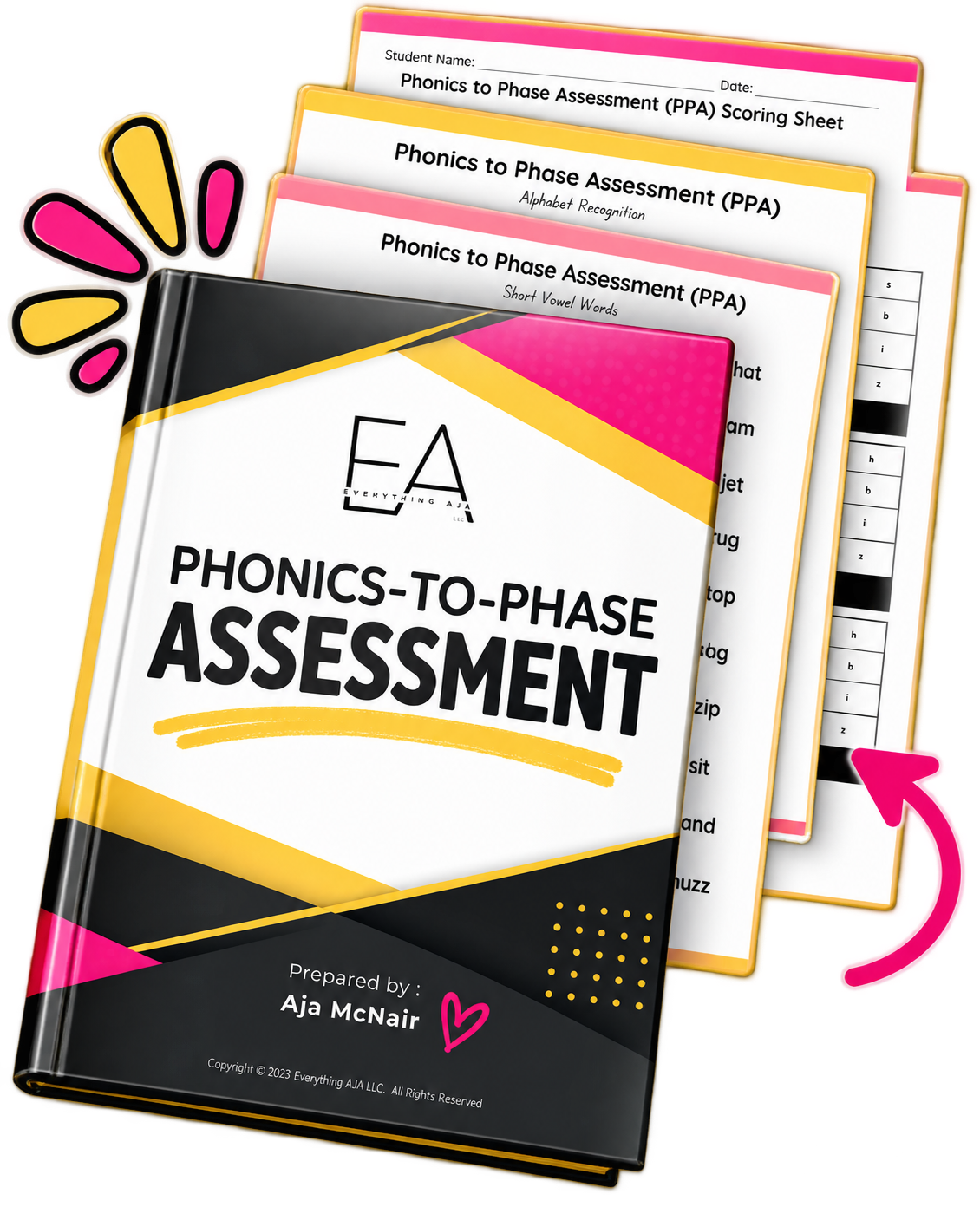
That's exactly why I created the Phonics to Phase Assessment.
Take the Next Step With the Phonics to Phase Assessment
The Phonics to Phase Assessment is designed to help parents and educators better understand where a child is in their phonics development so they can make more informed decisions about what to teach next.
Instead of randomly selecting reading activities and hoping they work, you can begin identifying the skills your child needs to strengthen.
Because when you understand your child's current reading abilities, you can choose lessons, games, and activities with greater intention.
And that makes teaching reading feel a whole lot less overwhelming.
Ready to discover where your child is in their reading journey?
👉 Get started with the Phonics to Phase Assessment and take the guesswork out of teaching reading.
START THE PHONICS TO PHASE ASSESSMENT
Final Thoughts: Give the Gift of Learning This Christmas
Christmas is such a wonderful opportunity to create memories, celebrate with family, and watch our children's excitement as they open their gifts.
And while every Christmas present doesn't have to be educational, it's wonderful to find gifts that bring children joy while supporting their development.
Whether you choose an interactive phonics game, a hands-on math activity, a word-building set, or a creative problem-solving challenge, remember that the goal isn't to turn Christmas morning into another school day.
The goal is to make learning something children can enjoy!
So have fun exploring these educational Christmas gift ideas, choose what works best for your child, and most importantly, enjoy the opportunity to learn and play together.
And if teaching your child to read is one of your goals for the coming year, remember that you don't have to figure it all out on your own.
Start by discovering where your child is with the Phonics to Phase Assessment, and let's make the journey toward confident reading more intentional, enjoyable, and successful.
Merry Christmas and happy learning!
With love,
Aja
Everything Aja
Affiliate Disclosure: As an Amazon Associate, I earn from qualifying purchases. This article contains affiliate links, which means I may earn a commission from qualifying purchases at no additional cost to you. Thank you for supporting Everything Aja!
Lessen your stress by downloading my FREE Activity guide that features 3 activities that you can use with any lesson, standard or skill. In this FREE ebook, you will also get my FREE School Charades Icebreaker game.